What Happens When You Don't Donate: The Dark Side of Textile Waste

Kelly Ferrell
January 15, 2025
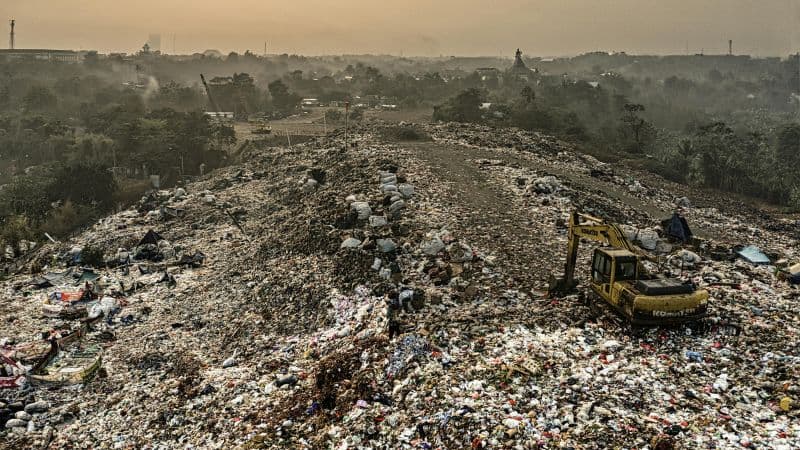
Have you ever wondered what happens to that old sweater you tossed in the trash? Or those jeans that didn't quite fit anymore? I'll be honest: I didn't think much about it either until I started digging into the numbers. What I found was eye-opening, and a little unsettling. But here's the good news: once you know what's really going on, you have the power to change it. Let's pull back the curtain on textile waste and discover how small choices can make a big difference.
The Numbers Are Staggering
Let's start with the big picture. According to the U.S. Environmental Protection Agency (EPA), Americans generated about 17 million tons of textile waste in 2018. And here's the kicker: 66% of that ended up in landfills. That's 11.3 million tons of clothing, shoes, and fabrics just sitting there, slowly decomposing and releasing greenhouse gases.
And it's getting worse. A recent Government Accountability Office (GAO) report found that textile waste has increased by over 50% since 2000, driven largely by the rise of fast fashion. Globally, an estimated 92 million tons of textiles end up in landfills each year. That's roughly the equivalent of a garbage truck full of clothes being dumped every single second.
By the Numbers:
- 811%increase in textile waste since 1960
- 17M tonsof textiles generated annually in the U.S.
- Only 15%of textiles get recycled
- 81 lbsof clothing the average American throws away each year
What Actually Happens in Landfills
Here's where it gets really interesting (and not in a good way). When your clothes end up in a landfill, they don't just quietly disappear. Natural fibers like cotton and wool break down over time, but in the process, they release methane, a greenhouse gas that's about 28 times more potent than carbon dioxide when it comes to trapping heat in our atmosphere.
Synthetic fabrics? Those are a whole different story. Polyester, nylon, and acrylic are essentially plastics, and they can take 200 years or more to decompose. While they're sitting there, they're slowly releasing microplastics into the soil and groundwater. Some studies estimate that up to 85% of human-made pollution on shorelines comes from textile microfibers.
Think about it:
That polyester shirt you threw away last year? It could still be around when your great-great-great-grandchildren are born. Makes you think twice, doesn't it?
The Fashion Industry's Footprint
The textile waste problem is really part of a bigger story about how we make and consume clothing. According to the United Nations Environment Programme, the fashion industry is responsible for about 10% of global carbon emissions. That's more than all international flights and maritime shipping combined.
It's also the second-largest consumer of water globally. It takes about 700 gallons of water to produce a single cotton t-shirt, and around 2,000 gallons for a pair of jeans. That's enough drinking water for one person for over five years, all for just one pair of pants!
The Water Problem:
- 700 gallons needed for one cotton t-shirt
- 2,000 gallons needed for one pair of jeans
- 17-20% of global wastewater comes from the fashion industry
- 500,000 tons of microfibers released into oceans annually
The dyeing and finishing processes are particularly harmful. Wastewater from textile factories, often containing toxic chemicals, heavy metals, and dyes, frequently ends up in rivers and oceans, sometimes untreated. This pollutes drinking water supplies and devastates marine ecosystems.
Fast Fashion: The Culprit We Can't Ignore
Between 80 and 100 billion new clothing garments are produced globally every year. That's more than 10 items for every person on Earth, every single year. And we're not wearing them for long. The average garment is worn just 7-10 times before being discarded.
I'll admit, I've fallen into the fast fashion trap before. That $10 dress seemed like such a bargain at the time. But when I really thought about the true cost (the environmental impact, the resources used, the fact that it would probably end up in a landfill within a year), suddenly it didn't seem like such a great deal.
Here's the thing: the fast fashion business model depends on us constantly buying more. But we have the power to step off that treadmill. Every piece of clothing we donate instead of throw away, every item we buy secondhand, every garment we wear a little longer... it all adds up.
The Good News: You Can Make a Difference
Okay, I know that was a lot of heavy information. But here's where it gets hopeful: you have more power than you think. The choices you make about your clothes (how you buy them, how long you keep them, and what you do with them when you're done) can genuinely help turn this around.
5 Ways to Fight Textile Waste:
- 1Donate what you don't wear. Instead of tossing clothes in the trash, give them a second life. Find a donation center near you and drop off your gently used items.
- 2Buy secondhand first. Thrift stores, consignment shops, and online resale platforms are treasure troves of great finds. Shopping secondhand keeps clothes out of landfills and reduces demand for new production.
- 3Choose quality over quantity. Investing in well-made pieces that last means buying less overall. Check out our guide on sustainable fashion for tips.
- 4Repair and upcycle. Before you get rid of something, ask yourself: can it be fixed? A missing button or small tear doesn't have to mean the end. Learn about upcycling options.
- 5Recycle what can't be donated. For items that are too worn to donate, look for textile recycling programs in your area. Many retailers now offer take-back programs for old clothes.
Why Donation Matters More Than You Think
When you donate your clothes instead of throwing them away, you're doing more than just keeping them out of a landfill. You're extending the life of that garment, which means all the water, energy, and resources that went into making it continue to provide value. You're also helping someone in your community who might really need that winter coat or those work clothes.
And here's something that surprised me: even clothes that seem past their prime can be useful. Many donation centers work with textile recyclers who can turn worn-out fabrics into insulation, cleaning cloths, or raw materials for new products. So even if your favorite t-shirt has seen better days, it might have a whole new life ahead of it.
Pro Tip:
Not sure what's donation-ready? Stick to clean, gently used items. If something is stained or torn, bag it separately for textile recycling instead.
Small Steps, Big Impact
I know it can feel overwhelming when you look at statistics like 92 million tons of textile waste per year. But remember: that number is made up of millions of individual choices. Every time you choose to donate instead of trash, to repair instead of replace, to buy secondhand instead of new, you're part of the solution.
The fashion industry is slowly starting to change, too. California recently passed the Responsible Textile Recovery Act, the first law requiring apparel manufacturers to take responsibility for the end-of-life of their products. The EPA is developing a national textile recycling strategy. Change is coming, and your choices help drive that change.
So next time you're cleaning out your closet, think about where those clothes are headed. With a little effort, you can make sure they end up helping someone instead of hurting the planet. And honestly? That feels pretty good.
Ready to make a difference? Find a donation center near you and give your clothes a second life.
Find Donation Centers
Kelly is a Senior Program Manager at the American Red Cross with nearly 7 years of experience in disaster response and community outreach. A graduate of Appalachian State University, she's passionate about connecting people with resources that make a real difference. When she's not coordinating relief efforts, Kelly loves sharing practical tips on sustainable giving and helping others find meaningful ways to support their communities.
Related Articles

From Closet to Cause: How Donating Clothes Helps You and the Earth
That overflowing closet? It's actually an opportunity to make a real difference for the planet and people in your community.
Sustainable Fashion: How to Shop Less and Donate More
The "one in, one out" rule changed how I think about my closet. Here's how it can work for you too.