
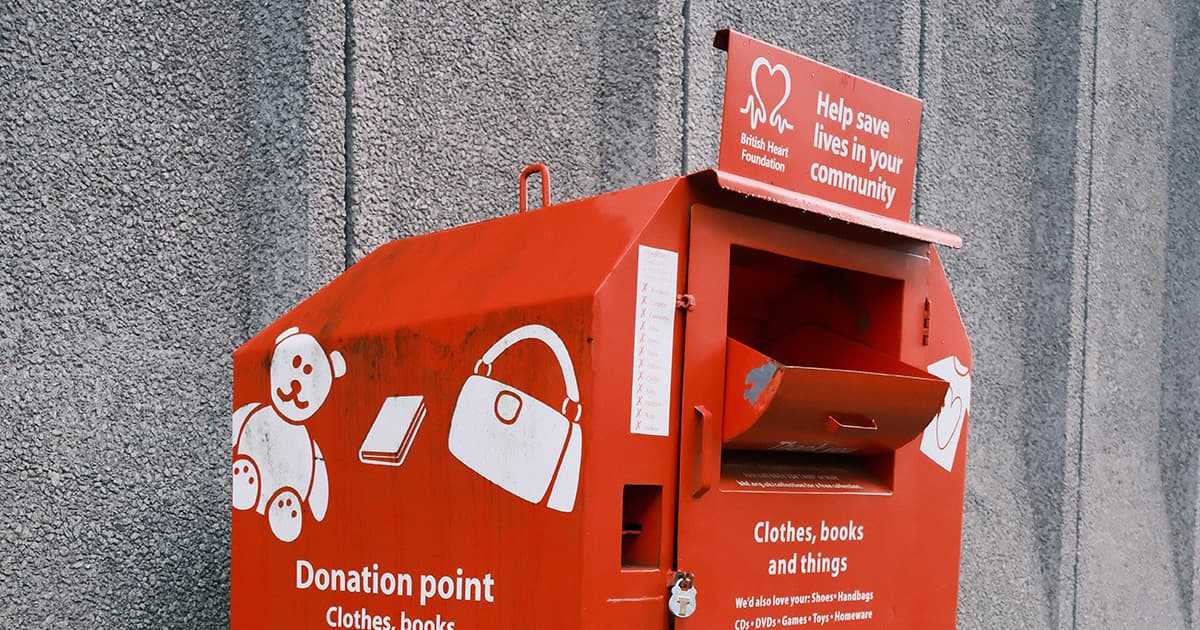
If you donate clothes regularly and count on that tax deduction every spring, heads up: the rules just changed. The One Big Beautiful Bill Act passed in 2025, and buried inside 1,100 pages of tax code are some provisions that directly affect anyone who donates clothing, furniture, or household goods.
I've been digging through the details so you don't have to. The short version: your clothing donations are still worth making, but the tax math works differently starting in 2026. Here's what actually changed and what it means for you.
The Big Change: A New Deduction That Doesn't Cover Clothing
The headline feature is a new charitable deduction for people who take the standard deduction. Starting in tax year 2026, non-itemizers can deduct up to $1,000 in charitable contributions ($2,000 for married couples filing jointly). Sounds great, right?
Here's the catch: it only applies to cash donations. That bag of clothes you dropped off at Goodwill? Doesn't count toward this new deduction. Neither does the furniture you gave to Salvation Army or the professional attire you brought to Dress for Success.
This matters because roughly 86% of American taxpayers use the standard deduction. For the vast majority of people, there is now zero tax benefit for donating clothing. Previously there wasn't either (non-itemizers couldn't deduct anything), but the new law created a deduction and specifically left clothing out.
Did You Know?
The new $1,000 non-itemizer deduction covers cash, checks, and credit card gifts to qualified charities. But non-cash donations like clothing, furniture, and household goods are excluded. This applies starting with your 2026 tax return (filed in early 2027).
The AGI Floor: Even Itemizers Feel This One
If you do itemize your taxes, there's a second change that affects you. The new law introduces a 0.5% AGI (Adjusted Gross Income) floor for charitable deductions. What does that mean in plain English?
It means you can only deduct charitable contributions that exceed 0.5% of your adjusted gross income. Everything below that threshold? Not deductible.
Here's How the Math Works
- 💰If your AGI is $100,000, the first $500 of charitable giving is not deductible
- 💰If your AGI is $200,000, the first $1,000 of charitable giving is not deductible
- 💰If your AGI is $60,000, the first $300 of charitable giving is not deductible
This applies to all charitable deductions combined, not just clothing. Cash, clothing, and other donations are all subject to the floor.
For most people who donate a few bags of clothes per year, the fair market value falls well under this floor. That means the tax deduction for those donations effectively disappears, even for itemizers.
Who Gets Hit Hardest
Let's break this down by donor type:
Standard Deduction Filers (86% of taxpayers)
You get the new $1,000 cash deduction, but clothing donations provide no tax benefit. Before this law, you also got no deduction for clothing, so practically speaking, nothing changes for you on the clothing side.
Bottom line: No change in clothing donation tax benefits. You weren't getting one before, and you still aren't.
Itemizers Who Donate Moderately
If you itemize and typically donate a few hundred dollars' worth of clothing per year, the new AGI floor may wipe out your deduction entirely. Your clothing donations now need to be part of a total charitable giving amount that exceeds 0.5% of your AGI.
Bottom line: You might lose the deduction for smaller clothing donations.
Itemizers Who Donate Heavily
If you're already donating well above the 0.5% floor through a combination of cash and non-cash gifts, the floor has minimal impact. Your clothing deductions still count toward the total above the threshold.
Bottom line: Minimal impact. Keep your receipts and documentation as usual.
Why You Should Still Donate Clothing
I know what you might be thinking: if I'm not getting a tax break, why bother? I get it. But the tax deduction was never the main reason most people donate. Here's what hasn't changed:
- 🤝Someone needs what you have. Shelters, job programs, and families in crisis still need clean, wearable clothing every single day. That hasn't changed because of a tax bill.
- 🌍Landfills don't need more clothes. The U.S. generates 17 million tons of textile waste per year. Only about 15% gets recycled or reused. Your donation keeps clothes out of the waste stream.
- 🏠Thrift stores fund real programs. When Goodwill sells your donated jacket, the money pays for job training. When Arc Thrift sells your shoes, it funds programs for people with disabilities.
- 🧹Your closet will thank you. A lighter closet, a clearer head. The benefits of decluttering are real, and they have nothing to do with Schedule A.
Pro Tip
If you want to maximize tax benefits, consider combining your charitable giving. Bunch your cash and non-cash donations into a single tax year so the total exceeds the 0.5% AGI floor. Some people alternate years of heavy giving with years of standard deductions.
Practical Tips for Donors Going Forward
Here's how to navigate the new rules:
- 1
Keep getting receipts.
Even if you don't think you'll itemize, keep your donation receipts. Tax situations change, and you don't want to lose documentation you might need later.
- 2
Document fair market value.
Take photos of what you donate and estimate values using the IRS valuation guide or Goodwill's online tool. For larger donations, this is especially important.
- 3
Consider bunching donations.
Instead of small donations every year, save up and make a large donation every other year. This helps you clear the AGI floor in the years you give.
- 4
Talk to your tax preparer.
These rules take effect for the 2026 tax year. If you're on the fence about itemizing, a conversation with a tax professional before year-end can save you money.
The Bigger Picture
Charity watchdogs worry this law could reduce overall giving. When you remove or reduce tax incentives, some donors give less. Nonprofits across the country are bracing for the impact, especially organizations that rely heavily on non-cash donations like clothing.
But here's the thing I keep coming back to: most people who drop off a bag of clothes at their local Salvation Army or St. Vincent de Paul aren't doing it for the deduction. They're doing it because they have stuff they don't need and someone else does. That motivation doesn't change because of a tax bill.
The Tax Break Changed. The Need Didn't.
Shelters still need coats. Job programs still need professional attire. Kids still outgrow their shoes. The tax code may have shifted, but the reasons to donate haven't moved an inch.
Ready to drop off what you've been meaning to donate? Find a donation center near you and get those bags out of your closet and into someone's hands. For tips on what to donate and how to prepare your items, check out our donation etiquette guide.
And if you're curious about where your donated clothes actually end up after you drop them off, we traced the full journey in our deep dive on the lifecycle of donated clothing.

Kelly is a Senior Program Manager at the American Red Cross with nearly 7 years of experience in disaster response and community outreach. A graduate of Appalachian State University, she's passionate about connecting people with resources that make a real difference. When she's not coordinating relief efforts, Kelly loves sharing practical tips on sustainable giving and helping others find meaningful ways to support their communities.
Related Articles

Where Your Donated Clothes Actually End Up
Only 15% of donated clothes are sold locally. See the surprising journey of 17 million tons of textile waste.

Clothing Donation Etiquette: What to Do Before You Drop Off
A little prep goes a long way. Here's how to make sure your donations actually help.